Hyundai Advances US Investment Amid ICE Raid Controversy
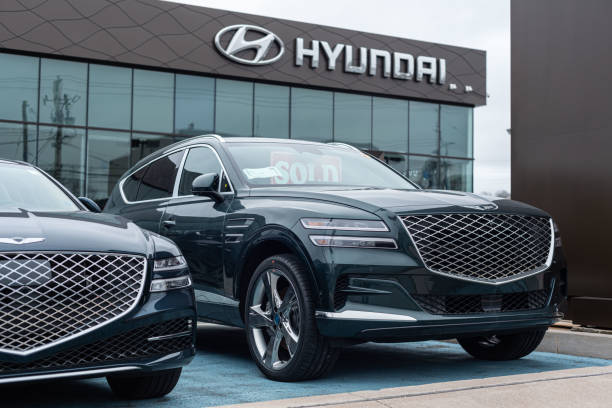
Undeterred by a recent ICE raid that resulted in the detention of hundreds of workers at a Georgia plant, Hyundai announced a bold new wave of investments in the United States. The automaker committed $2.7 billion toward a new EV battery factory at the site of the raid, underscoring its focus on electric vehicle expansion despite operational setbacks.
Strategic Investments and New Models
During its annual CEO Investor Day in New York City—marking the first time Hyundai held this event outside South Korea—the company unveiled plans to introduce a variety of electrified vehicles. By 2030, Hyundai aims to roll out over a dozen hybrid models and several extended-range electric vehicles, enhancing its lineup with more sustainable options. Additionally, the automaker announced the launch of a mid-sized pickup truck tailored for the North American market, slated for debut in 2030.
Response to ICE Raid and Commitment to US Manufacturing
Hyundai CEO Jose Muñoz opened the proceedings by expressing sympathy for the workers affected by the raid. On September 4th, ICE agents raided the joint Hyundai-LG Energy Solutions EV battery plant in Georgia, detaining nearly 500 employees, including around 300 Korean nationals. Reports from workers indicated some were handcuffed, chained, and held in detention for several days. The incident has prompted investigations into potential human rights violations by South Korean authorities.
Despite this incident, Hyundai remains focused on expanding its footprint in the United States. The Georgia Metaplant is central to Hyundai’s goal of increasing manufacturing locally, which Muñoz described as the “engine” of the company. The recent infusion of $2.7 billion will support the next phase of the plant’s development, helping to produce 500,000 vehicles annually by 2028, primarily EVs and hybrids. The expansion is expected to create around 3,000 new jobs in Georgia.
Future Outlook and Challenges
By 2030, Hyundai plans for 80% of its US vehicle sales to be domestically manufactured, increasing local supply chain content from 60% to 80%. This initiative is partly driven by the desire to meet US policy expectations amid ongoing tariff debates. However, Hyundai acknowledges that EV adoption may lag in North America compared to regions like Europe and China, mainly due to reduced government incentives.
Globally, Hyundai aims to sell 5.5 million vehicles annually by 2030, with more than half—about 3.3 million—being electric. This target represents an increase of 1.2 million vehicles each year, demonstrating Hyundai’s commitment to electrification and global growth.
Developing...
Follow topics and authors from this story to see more like this in your personalized homepage feed and to receive email updates.
Andrew J. Hawkins