Moya: DroidUp’s Warm-Skin, Biomimetic AI Robot Targets Public Spaces
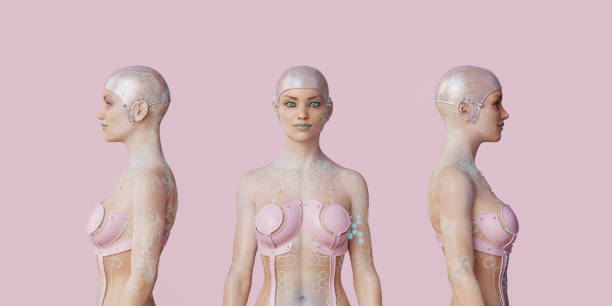
A Shanghai-based startup, DroidUp, has unveiled Moya, a humanoid robot it bills as the first “fully biomimetic embodied intelligent robot.” The company emphasizes Moya’s warm skin and humanlike presence as a step beyond typical robots, while positioning it for roles in healthcare, education, and other public-facing settings. The device is slated for a late-2026 launch with a list price around ¥1.2 million (about $173,000 / £127,000 / AU$248,000).
DroidUp says Moya’s skin is not just cosmetic. The robot reportedly maintains a body temperature between 32°C and 36°C (90°F–97°F), which the company argues could improve interactions with people in real-world environments. The warm skin, along with a claimed walking accuracy of 92%, is presented as evidence that Moya can operate with more natural, life-like movements. However, observers note that the gait still looks a bit stiff—Moya often shuffles as if recovering from a workout.
The Moya platform rides on the Walker 3 skeleton, a successor to the design that earned a bronze at the world’s first robot half-marathon in Beijing in 2025. Inside, a camera sits behind its “eyes,” enabling facial-like microexpressions and human–robot interaction. An onboard AI system powers these interactions, which DroidUp markets as a key feature of Moya’s biomimicry.
While the company’s claim of “the world’s first fully biomimetic embodied intelligent robot” may invite interpretation, Moya is pitched as part of a broader trend: robots moving from labs into public life. CES 2026 showcased humanoid concepts like the 1X Neo, which drew interest for home-use promises but never captured mass adoption. Public demonstrations have highlighted the gap between impressive demonstrations and practical home deployment, with many predicting that true consumer-ready humanoids will appear first in service roles rather than as household companions.
DroidUp envisions Moya in “public service scenarios” at train stations, banks, museums, and shopping malls, offering services such as guidance, information, and customer assistance. This aligns with what other makers are pursuing, such as UBTech’s humanoids already being deployed at border crossings for traveler support and inspections. If Moya’s capabilities mature, it could supplement frontline workers in crowded or information-heavy environments—but the broader market reality remains that truly evolved home robots are likely still years away from mass adoption.
Beyond the hype of warm skin and high-precision walking, experts say the real breakthroughs will be in reliability, safety, cost, and user acceptance. For now, plenty of attention surrounds Moya as a symbol of how biomimicry and embodied AI are pushing robots out of laboratories and into more visible, everyday roles—and how far the gap still is between a convincing demonstration and a practical, widely available home robot.