Artemis II: Live Moon Flyby Set to Write a New Chapter in Human Spaceflight
April 6, 2026
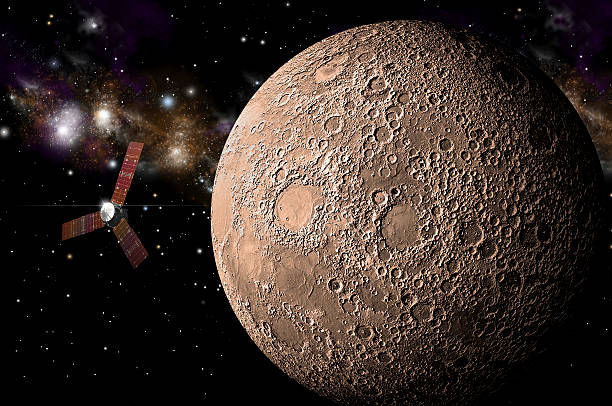
NASA’s Artemis II mission is making history today, as a four-person crew pilots the Orion spacecraft on a mission that marks humanity’s first voyage beyond low Earth orbit toward the Moon since the early 1970s. The crew’s 10-day journey will push farther from Earth than any humans have traveled before, culminating in a close lunar flyby that offers an extraordinary view of the Moon’s far side.
Live coverage and viewing options
- NASA is providing free, real-time coverage of Artemis II via NASA+, the NASA app, and the agency’s official website and YouTube channel. A dedicated flyby stream is also available for viewers who want a focused feed.
- In addition to NASA’s streams, viewers can watch through popular platforms such as Amazon Prime, Apple TV, Hulu, Netflix, HBO Max, and Roku.
When to tune in
- The lunar flyby is scheduled for Monday, April 6, 2026, with coverage beginning in the late morning Pacific Time, roughly around 10:00 a.m. PT / 1:00 p.m. ET. NASA has outlined a sequence of milestones in ET, subject to change:
- 12:41 p.m. ET — Orion enters the Moon’s sphere of influence, roughly 41 miles above the surface
- 1:30 p.m. ET — Mission science briefing to the crew
- 1:56 p.m. ET — The crew is expected to surpass the farthest distance ever traveled from Earth, a record set by Apollo 13
- 2:45 p.m. ET — Initiation of lunar observations
- 6:44–6:45 p.m. ET — Communication blackout as Orion passes behind the Moon
- 7:02 p.m. ET — Closest approach to the Moon at about 4,070 miles above the surface
- 7:07 p.m. ET — Maximum distance from Earth during the mission
- 7:25 p.m. ET — Earthrise as Earth comes back into view on the Moon’s opposite edge; comms reacquisition expected around this time
- 8:35–9:32 p.m. ET — A solar eclipse occurs from the crew’s perspective
- 9:20 p.m. ET — Lunar observations wrap up
(Times are ET and may shift with mission adjustments.)
What to expect from the lunar flyby
- The Orion capsule is slated to skim roughly 4,000–6,000 miles above the Moon’s surface, affording a rare view of the Moon’s far side—something humanity has not seen with its own eyes during a crewed mission.
- There may be up to about 50 minutes of interrupted communications as Orion briefly travels behind the Moon.
- Over the course of several hours, the crew will capture imagery and perform scientific observations, with a notable moment anticipated during a solar eclipse that will reveal the Sun’s outer atmosphere from their vantage point.
- The Artemis II team comprises NASA astronauts Reid Wiseman, Victor Glover, and Christina Koch, joined by Canadian astronaut Jeremy Hansen—the first Canadian to travel this far into space.
- The mission is planned to last around 10 days, with Orion returning to Earth and splashing down via parachutes in the Pacific Ocean off California, if all goes as planned.
Looking ahead
- Artemis II is designed to validate the life-support, navigation, and deep-space operations needed for future crewed lunar landings.
- NASA’s longer-term goal is to establish a sustained human presence on the Moon by the late 2020s and use this stepping stone to missions to Mars.